Zhangjiajie Grand Canyon · Hunan, China
430 Metres of Glass, 300 Metres of Air
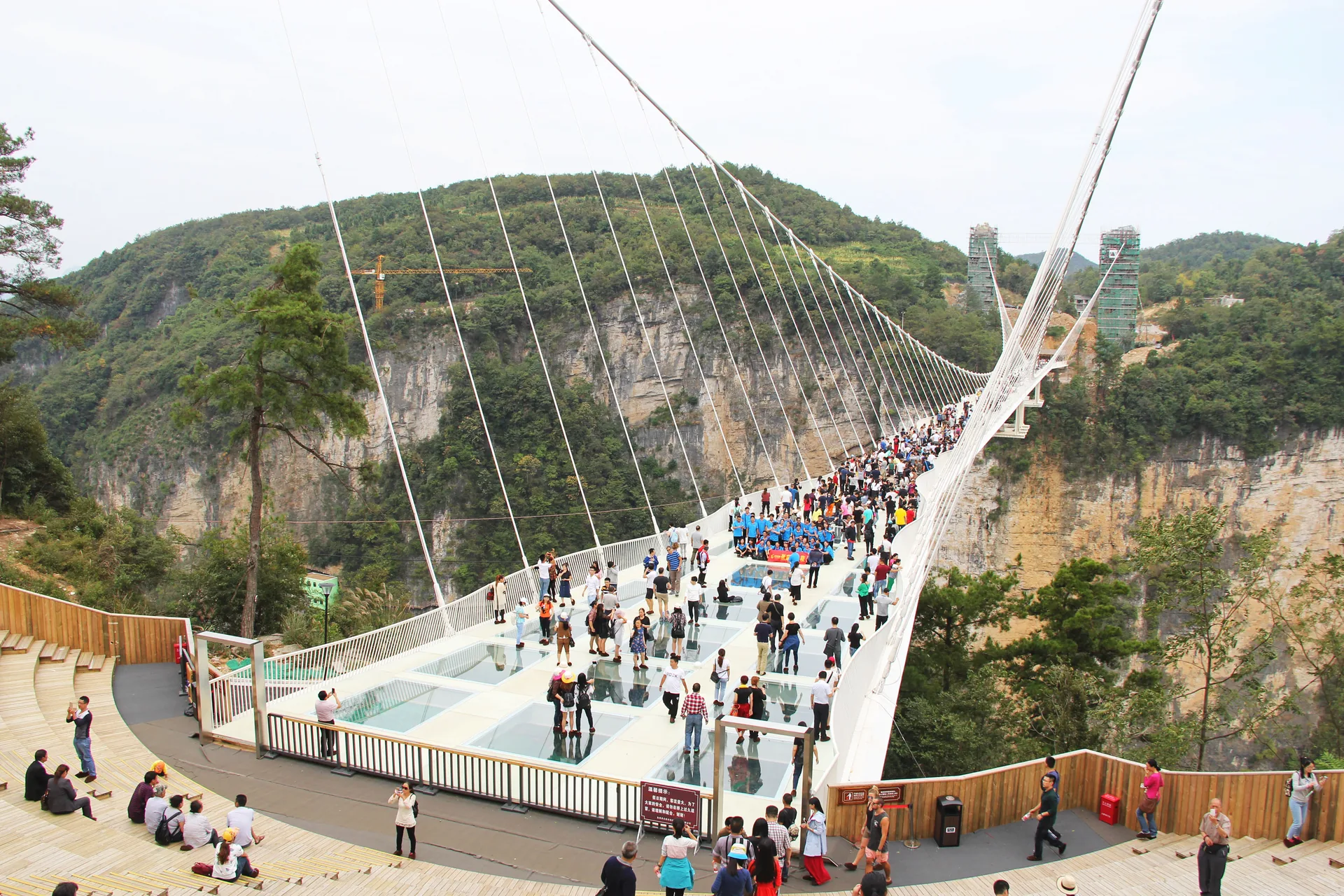
A see-through glass deck strung clean across the Zhangjiajie Grand Canyon — nearly half a kilometre long, three hundred metres of nothing beneath your feet. This is the one that spans the canyon, not the cliff walkway on Tianmen and not the Avatar mountains. Here's how to tell them apart, how the passport-tickets work, and how to get across it.
Which glass attraction?
Three attractions get confused. This is the one that spans the canyon.
| Glass Bridge (this one) | Tianmen Mountain | Forest Park (Avatar) | |
|---|---|---|---|
| What | A canyon-spanning glass bridge | Cliff-edge glass skywalks | Sandstone pillars + Bailong glass lift |
| The glass | 430 m deck, 300 m up | Short walkways fixed to the cliff | A 326 m glass elevator up a cliff |
| Also there | Bungee, zipline, canyon trails | Heaven's Gate, 99-bend road, cable car | Avatar 'Hallelujah' peaks, viewpoints |
| Where | Grand Canyon scenic area | ~60 km away, near the city | ~40 min from the Glass Bridge |
| Ticket | Its own timed, passport ticket | Separate ticket | Separate timed ticket |
430 metres of glass, 300 of air
430 metres of glass, 300 of air
A deck of glass across a canyon
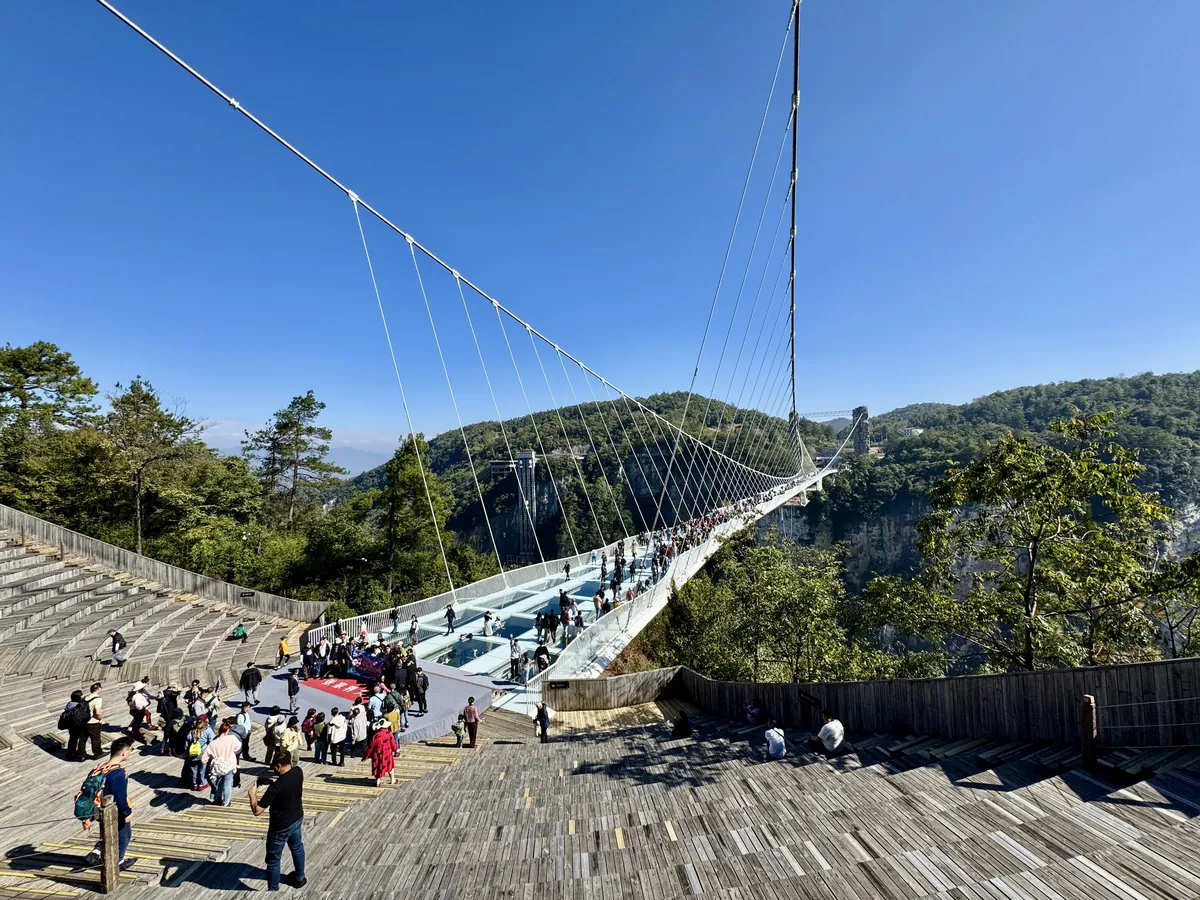
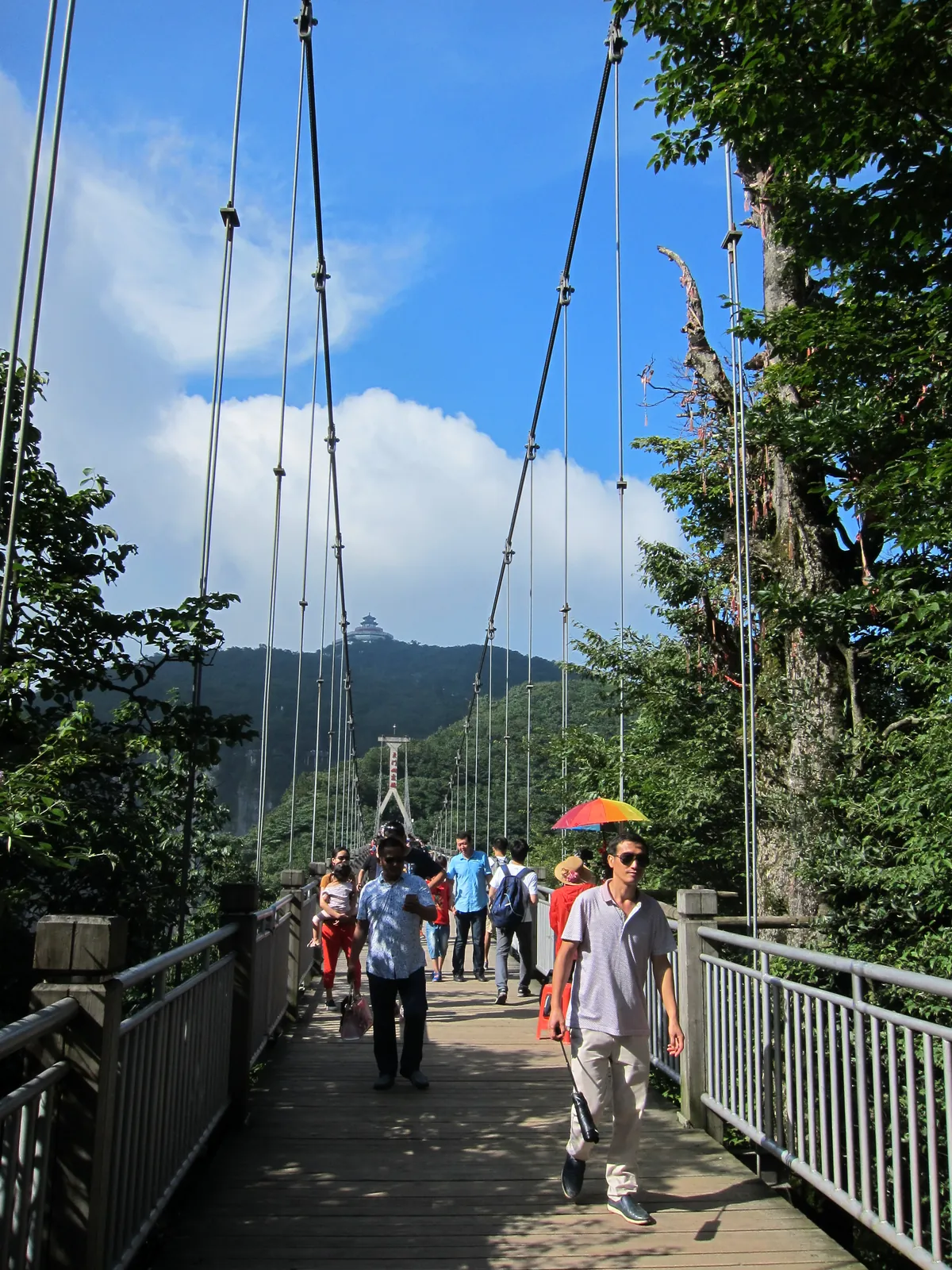
The Zhangjiajie Grand Canyon Glass Bridge is a suspension footbridge with a see-through glass floor, strung across a gorge in the mountains of western Hunan. It runs about 430 metres from rim to rim, is six metres wide, and hangs roughly 300 metres above the canyon floor — a walk across close to half a kilometre of glass with nothing but air beneath you. Designed by the Israeli architect Haim Dotan and opened in August 2016, it was, when it opened, briefly the longest and highest glass-bottomed bridge in the world; other bridges have since taken the records, but the experience is undiminished.
Engineered to be walked
The deck is made of roughly a hundred to a hundred and twenty triple-laminated tempered-glass panels, each about five centimetres thick. Before it opened, officials publicly took sledgehammers to the glass — and reportedly drove a car across it — to prove it holds; the lower layers stayed intact after a dozen blows. You pull free shoe covers over your footwear at the entrance to protect the surface, and the bridge is capped at several hundred people at a time. It is engineered to be entirely safe. Whether it feels that way, three hundred metres up, is another matter.
The vertigo is the point
Reviews split neatly into two camps: those who found it less frightening than expected and rather fun, and those for whom a see-through floor over a 300-metre drop is a genuine test of nerve. Either way, that tension is what people come for. It is not a subtle attraction — it is a big, engineered thrill, best approached knowing exactly what it is, which of Zhangjiajie's three 'glass' attractions you're standing on, and how you got the ticket to be there.
before you go
The ticket problem
The single thing that catches foreign visitors out at Zhangjiajie isn't the height — it's the tickets. Understanding the system is the difference between walking across and standing at a locked gate.
Real-name, one passport per ticket
Every ticket is tied to a single passport number, and your name must match the booking exactly. No passport, no entry — and a photo of your passport won't do; the gate needs the original document, with facial registration on first entry. This real-name system, not the drop, is what turns an unprepared visit into a wasted trip.
WeChat-first, Chinese-payment
The official booking channel is a WeChat mini-program, backed by on-site counters that take RMB cash or Chinese payment apps — rails most foreign visitors don't have set up. The mini-program has added an English interface, but it remains clunky against a straightforward OTA booking. For a foreign traveller, the path of least resistance is an English pre-booked ticket or tour.
Timed slots and daily caps
Entry is timed and capacity-capped, and morning slots sell out days ahead in the peak months — July, August and the 1–7 October Golden Week. It is not a reliable walk-up attraction in season. Booking ahead, whichever way you do it, is essential; a tour that holds your slot removes the risk of arriving to find the day sold out.
Why a tour earns its price
A guided day tour costs far more than a bare entry ticket, and on the face of it that looks like a poor deal — until you weigh what it removes: the passport-linked booking, the WeChat and Chinese-payment friction, the timed-slot scramble, and the transport between scenic areas that sit tens of kilometres apart with Chinese-first signage. For many foreign visitors, that convenience is precisely what they're paying for, and it's worth being clear-eyed that a cheap ticket on another platform is possible if you'd rather handle the logistics yourself.
the day
A day at the Grand Canyon
The Glass Bridge is the headline, but it sits within the wider Grand Canyon scenic area — a half-day of bridge, canyon floor and water. Here's how the day tends to run.
- 01
Across the glass
Most people do the bridge first, early, before the tour buses arrive and while the light is good. You collect your free shoe covers, step out onto the glass deck, and cross the canyon — pausing (or not) to look down through the glass at the drop. The thrill add-ons hang off the bridge here: a set of long swings beneath the deck, a canyon zipline, a downhill sky slide, and a bungee jump billed as one of the world's highest.
- 02
Down into the canyon
From the far side, the route descends into the Grand Canyon itself — a long series of stairs and trails down through the gorge the bridge spans. It's a striking change of scale: from three hundred metres up to the canyon floor, with the bridge now a thin line of glass far overhead. Go early, because the descent is busy by mid-morning in season.
- 03
Waterfalls and the One-Line Sky
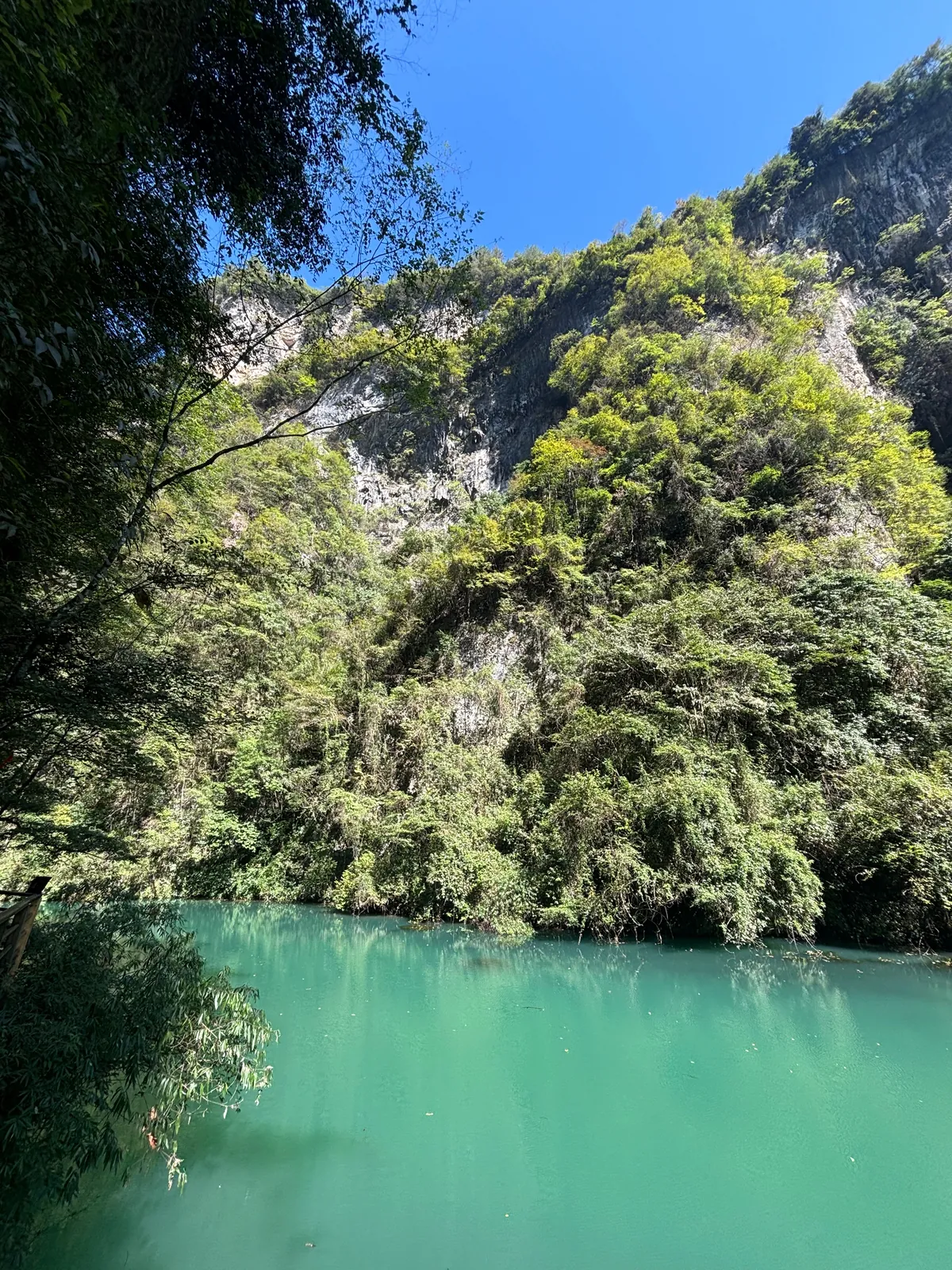
The canyon floor threads past waterfalls — Butterfly Spring among them — and through the 'One-Line Sky,' a narrow cleft where the walls close to a sliver of daylight overhead. It's the softer, greener counterpoint to the exposed glass of the bridge, and the part many visitors end up enjoying most.
- 04
The reservoir boat
The half-day usually ends with a short boat ride across the Tianmen (Shimen) reservoir at the bottom of the canyon, a calm float out beneath the cliffs before the climb back up. Allow three to five hours for the whole scenic area, more if you're doing the bungee or the trails at leisure.
The bridge and the canyon
The bridge and the canyon
What you'll actually encounter, on the deck and in the gorge below it.
The glass crossing
About 430 metres of clear, triple-laminated tempered glass, six metres wide, three hundred metres above the canyon floor. You cross it in shoe covers, at your own pace, with the drop visible straight down through the panels. The single most photographed — and most nerve-testing — few minutes in Zhangjiajie.
Sledgehammer-tested
Each panel is roughly five centimetres of triple-laminated tempered glass, and the engineering was proven in public before opening: officials struck the deck with sledgehammers, and the lower layers held after a dozen blows. It is entirely safe; the fear is a trick of the clear glass, not the structure.
Bungee, swings and zipline
The bridge is a launch pad for extras: long swings beneath the deck, a canyon zipline, a downhill sky slide, and a bungee jump billed as one of the world's highest, a roughly 260-metre freefall for those who want to fall off the thing rather than merely walk across it. All are optional add-ons at extra cost.
The canyon floor
Below the bridge, the Grand Canyon itself: staircases and trails down through the gorge, past waterfalls including Butterfly Spring, and through the 'One-Line Sky,' a cleft where the walls nearly meet overhead. A green, cool, dramatic descent that balances the exposed glass above.
The reservoir float
At the bottom, a short boat ride across the Tianmen (Shimen) reservoir carries you out beneath the cliffs — a calm close to the half-day before the walk back up. A quiet, scenic pause after the adrenaline of the deck.
The wider Zhangjiajie
The bridge is one part of a remarkable region: the Avatar-mountains Forest Park with its sandstone pillars and the 326-metre Bailong glass elevator sits about forty minutes away, and Tianmen Mountain — with its own cliff glass walkways, Heaven's Gate and 99-bend road — is roughly an hour off. Together they're a three-day trip, not a day out.
A ticket, or a guided day?
A ticket, or a guided day?
Once you know it's the right bridge, the choice is how to book it — the bare entry ticket, or a guided day that carries the logistics. Both are valid; they suit different travellers.
Cheapest, most independent
A plain Grand Canyon and Glass Bridge entry ticket is the cheapest way in, close to the official gate rate with a modest markup on an OTA. It suits confident independent travellers who are happy to navigate the real-name passport booking, the timed slots, and the transport between the region's scattered scenic areas themselves. GetYourGuide's inventory here skews to tours rather than bare tickets; the cheapest standalone tickets live on other China-focused platforms.
The friction removed
A guided private day tour costs substantially more, but it bundles hotel pickup, an English-speaking guide, the passport-linked entries, and the transport between areas that sit tens of kilometres apart — and it often pairs the Glass Bridge with the Avatar-mountains Forest Park, the two most people actually want. For a foreign visitor without WeChat Pay and a spare few hours to decode the booking system, that convenience is the whole value, and it's what the featured tours provide.
when to go
When to go, and the weather
Season and sky both matter here — one for the crowds, the other because the bridge can simply close.
Spring and autumn are best
April to June and September to November bring the most comfortable weather and the clearest canyon views, avoiding both the summer heat and the deepest winter cold. Autumn in particular gives crisp air and colour in the gorge. These shoulder seasons are the sweet spot for a Zhangjiajie visit, bridge included.
Avoid the peak crush
July and August, and above all the 1–7 October Golden Week, are the busiest and hardest to book: timed slots sell out days ahead and the scenic areas are packed. If you must travel then, book everything well in advance and start each day as early as the gates allow. The region's popularity with domestic tourists is not to be underestimated.
The bridge closes in bad weather
This is the caveat that catches people out: the Glass Bridge closes entirely in rain, heavy fog or snow. A wet or foggy day can cancel your crossing outright, whatever your ticket says, and the mountain weather in Hunan is changeable. It's the strongest argument for a booking with free cancellation or flexible rescheduling, and for building a spare day into a Zhangjiajie itinerary.
Opening hours shift with the season
The bridge and scenic area open longer in the warmer months (roughly 07:30 to 17:30 from April to November) and shorter in winter (around 08:00 to 16:00, December to March). Arriving at opening is the way to beat the crowds onto the deck and to have time for the canyon descent afterwards.
The Glass Bridge, in pictures
The Glass Bridge, in pictures
Glass Bridge tours
Find a Glass Bridge day for your dates
Below is the passport-linked Grand Canyon and Glass Bridge entry, booked through GetYourGuide with live seats so you can see the exact total, converted, before you commit to a slot. Prefer the WeChat booking maze handled for you instead? The fuller guided days, which pair the bridge with the Avatar-mountains park, sit alongside it.
Planning your visit
Planning your visit
Be sure it's the right glass
Before you book anything, make sure you're buying the attraction you mean. Three separate 'glass' sights in the Zhangjiajie area get confused constantly: this canyon-spanning Glass Bridge; the cliff-edge glass skywalks on Tianmen Mountain, some sixty kilometres away; and the Avatar-mountains Forest Park with its 326-metre Bailong glass elevator, about forty minutes off. They're different parks with different tickets. Search results and even some tour listings blur them, so read the itinerary carefully.
Sort the passport ticket
Every ticket here is tied to one passport number, booked WeChat-first and paid through Chinese apps or RMB, timed and capped, and prone to selling out in peak season. Decide early whether you'll navigate that yourself for a cheap entry ticket, or pay for an English tour that handles it. Either way, book ahead — days in advance in shoulder season, further in July, August or Golden Week — and carry your original passport, not a photo, to the gate.
Give the region three days
Zhangjiajie is deep in western Hunan and takes real effort to reach — a flight of around two and a half hours, or a long high-speed-train journey. Once there, the three headline areas (the Forest Park, the Grand Canyon and Glass Bridge, and Tianmen Mountain) are spread out and each is a half- to full-day. Three days is the sensible minimum; trying to see it all in one is a mistake. Plan the Glass Bridge as one day of a longer regional trip.
Watch the weather
The bridge closes in rain, heavy fog or snow, and Hunan's mountain weather is changeable, so a wet day can cancel your crossing outright. Favour a booking with free cancellation or easy rescheduling, keep an eye on the forecast, and if you can, build a spare day into the trip so a closed bridge doesn't cost you the whole reason you came.
Decide on the thrills
The bungee, swings, zipline and sky slide are all optional extras at additional cost, paid on the day. If you want the world's-highest bungee off the bridge, factor in the roughly US$285 and check it's operating; if you just want to walk across, none of it is required. Either way, wear comfortable shoes for the canyon stairs, and be ready for a lot of steps if you descend into the gorge after the deck.
Planning a Zhangjiajie trip
Planning a Zhangjiajie trip
Zhangjiajie's Three 'Glass' Attractions, Kept Straight
The canyon Glass Bridge, Tianmen's cliff skywalks and the Avatar-mountains elevator — how to tell them apart before you book the wrong one.
Read more →THE TICKETSZhangjiajie Glass Bridge Tickets: A Foreigner's Guide
Real-name passports, WeChat booking and timed caps — how the ticketing actually works, and how to get around the friction.
Read more →THE NERVE TESTIs the Zhangjiajie Glass Bridge Scary?
A see-through floor over a 300-metre drop — how frightening it really is, why it's safe, and how to walk across if heights aren't your thing.
Read more →THE LOGISTICSGetting to Zhangjiajie, and How Long to Stay
Deep in western Hunan and spread across three big scenic areas — how to reach it, and why three days is the minimum.
Read more →THE EXTRASThe Glass Bridge Thrills: Bungee, Swings and Zipline
Beyond walking across — the world's-highest bungee, the under-deck swings, the canyon zipline and the sky slide, and whether to bother.
Read more →WHEN TO GOThe Best Time to Visit the Zhangjiajie Glass Bridge
Shoulder-season weather, the peak-season crush and the days the bridge simply closes — how to time a crossing.
Read more →questions
Glass Bridge questions
Is this the same as the Tianmen glass walkway or the Avatar mountains?
No — and this is the most important thing to get right. There are three separate 'glass' or Avatar attractions in the Zhangjiajie area that people constantly confuse. This is the Grand Canyon Glass Bridge: a 430-metre glass deck spanning a canyon, 300 metres up. Tianmen Mountain, about 60 km away near the city, has short cliff-edge glass skywalks (plus Heaven's Gate, the 99-bend road and a long cable car). The Zhangjiajie National Forest Park is the Avatar-mountains landscape with its sandstone pillars and the 326-metre Bailong glass elevator. They're different parks with different tickets — make sure you're booking the one you mean.
Is the Glass Bridge safe, and is it scary?
It's safe. The deck is roughly a hundred triple-laminated tempered-glass panels, each about five centimetres thick, and before opening officials publicly struck it with sledgehammers — and reportedly drove a car across — to prove it holds, with the lower layers intact after a dozen blows. It's capped at several hundred people at a time. Whether it's scary is another matter: a see-through floor over a 300-metre drop is a real test of nerve for anyone afraid of heights, though plenty of visitors find it less frightening than expected, and rather fun. The fear is the clear glass, not the structure.
How do the tickets work, and why book a tour?
Tickets are real-name and tied to a single passport number — your name must match the booking, and you need the original passport (not a photo) at the gate, with facial registration on first entry. The official channel is a WeChat mini-program with Chinese payment apps, entry is timed and capacity-capped, and morning slots sell out days ahead in peak season. That friction is why many foreign visitors book an English tour: it handles the passport-linked entry, the timed slot, and the transport between scenic areas that sit tens of kilometres apart. A cheap standalone ticket is possible if you'd rather manage the WeChat, payment and logistics yourself.
Getting to Zhangjiajie — how far is it, and how many days should I allow?
Zhangjiajie is deep in western Hunan and takes effort to reach — realistically a flight of about two and a half hours, or a long high-speed-train journey (seven hours or more from Shanghai, around twelve from Beijing). It is not a bolt-on to a Beijing or Shanghai city break. Once there, the three headline areas — the Forest Park, the Grand Canyon and Glass Bridge, and Tianmen Mountain — are spread out, each a half to full day, so about three days is the sensible minimum for the region. Plan the Glass Bridge as one day of a longer trip.
Can bad weather stop me crossing?
Yes. The Glass Bridge closes entirely in rain, heavy fog or snow, and Hunan's mountain weather changes quickly, so a wet or foggy day can cancel your crossing even with a valid ticket. Favour a booking with free cancellation or easy rescheduling, watch the forecast, and — if you can — build a spare day into your itinerary so a single bad-weather closure doesn't cost you the whole reason you travelled. Opening hours are also shorter in winter (roughly 08:00–16:00) than in the warmer months (about 07:30–17:30).